Inside America’s Black Box: A Rare Look at the Violence of Incarceration

Would we fix our prisons if we could see what happens inside them?

Prisoners at the St. Clair Correctional Facility in Alabama made knives out of fan blades and other materials.

March 30th 2019 By Shaila Dewan and published here

The contraband is scary enough: Homemade knives with grips whittled to fit particular hands. Homemade machetes. And homemade armor, with books and magazines for padding.

Then there is the blood: In puddles. In toilets. Scrawled on the wall in desperate messages. Bloody scalps, bloody footprints, blood streaming down a cheek like tears.

And the dead: a man kneeling like a supplicant, hands bound behind his back with white fabric strips and black laces. Another, hanging from a twisted sheet in the dark, virtually naked, illuminated by a flashlight beam.

These were ugly scenes from inside an American prison, apparently taken as official documentation of violence and rule violations.

Prisons are the black boxes of our society. With their vast complexes and razor wire barriers, everyone knows where they are, but few know what goes on inside. Prisoner communication is sharply curtailed — it is monitored, censored and costly. Visitation rules are strict. Office inspections are often announced in advance.

So when prisoners go on hunger strikes or work strikes, or engage in deadly riots, the public rarely understands exactly why. How could they? Many people harbor a vague belief that whatever treatment prisoners get, they surely must deserve. It is a view perpetuated by a lack of detail.

But some weeks ago, The New York Times received more than 2,000 photographs that evidence suggests were taken inside the St. Clair Correctional Facility in Alabama. Some show inmates as they are being treated in a cramped, cluttered examination room. Others are clinical: frontal portraits, close-ups of wounds.

[The Department of Justice found a “flagrant disregard” for Alabama prisoners’ right to be free of cruel and unusual punishment.]

It is hard to imagine a cache of images less suitable for publication — they are full of nudity, indignity and gore. It is also hard to imagine photographs that cry out more insistently to be seen.St. Clair is the most violent prison in Alabama, which has the country’s highest prison homicide rate, according to the Equal Justice Initiative.

St. Clair is the most violent prison in Alabama, which has the country’s highest prison homicide rate, according to the Equal Justice Initiative.

As I scrolled through them, shock rose from my gut to my sternum. Was I looking at a prison, or a 19th-century battlefield? Those pictured betrayed little emotion and certainly none of the bravado broadcast by their tattoos: South Side Hot Boy, Something Serious, $elfmade.

After considering the inmates’ privacy, audience sensibilities and our inability to provide more context for the specific incidents depicted, The Times determined that few of these photos could be published. But they could be described.

St. Clair is known to be a deeply troubled institution in a state with an overcrowded, understaffed, antiquated prison system. Alabama has one of the country’s highest incarceration rates and, as measured by the most recent counts of homicides available, its deadliest prisons, according to a report by the Equal Justice Initiative, a nonprofit civil rights organization in Montgomery. Suicide is epidemic as well — there have been 15 in the past 15 months

For years there have been complaints that St. Clair inmates are heavily armed — some for self-protection — and allowed to move freely about the compound. In fact, St. Clair is more deadly now than it was in 2014, when the Equal Justice Initiative brought suit against it for failing to protect prisoners. There have been four stabbing deathsthere in seven months.

Last June, the group said the prison was failing to comply with a settlement agreement.

Prison officials dispute that, saying the Alabama Department of Corrections is committed to improving safety and security. The department has requested money to raise salaries and increase the number of officers. Multiple law enforcement agencies recently teamed up to conduct a contraband search at St. Clair that recovered 167 makeshift weapons, said Bob Horton, a department spokesman. 

But as of October, the prison was still severely short staffed, with more vacancies than actual officers. 

A second lawsuit, brought by the Southern Poverty Law Center, a legal advocacy group in Montgomery, says the prisons have failed to provide adequate mental health care. (The photos show a message painted on the wall in blood, with letters about the height of a cinder block. “I ask everyone for help,” it read in part. “Mental Health won’t help.”)

An inmate held in solitary testified that his monthly mental health sessions lasted only five to 10 minutes.
He cut himself with razor blades and used his blood to write a plea for help.

The photos were given to The Times by the S.P.L.C., which said it had received them on a thumb drive. 

Bob Horton, a spokesman for the corrections department, said the department could not authenticate the photos. 

But Maria Morris, a staff lawyer at the S.P.L.C., said the environment shown looked like St. Clair, and some photos had identifying information that corresponded to known inmates or showed men that the S.P.L.C. recognized as its clients (S.P.L.C. removed the identifying information before giving the images to The Times).

The man who painted the blood on the wall, referred to in the lawsuit as M.P., had schizophrenia and bipolar disorder and repeatedly tried to kill himself. He testified that he had been held in solitary confinement for six years, allowed to exercise one hour a day in ankle shackles.

Ms. Morris has specialized in prisoner’s rights litigation for more than a decade. She hears accounts of rape, beating or stabbing on a daily basis. I asked what it was like for her to see the photographs. 

They made it impossible, she explained, to retreat into that small, self-protective corner of her mind — the place where it was possible to imagine that her clients’ stories might not be as bad as they sounded. 

“Seeing what had been done to those people’s bodies — it just stripped away all of the numbing,” she said. “It was very painful to see that all of the suffering that I’ve been hearing about and trying to relate to the court — how deep it goes.”

The thumb drive included a document titled “READ ME FIRST” and claiming to be from a corrections officer. It said the photos represented only a “small portion of the injuries from inmate-on-inmate violence in the past three years.”

The writer said that the current legal agreements governing the prison stood no chance of working: “The day-to-day treatment of these men does nothing but foster anger and despair. Until major fundamental changes take place in our sentencing and housing of these men it will only continue to get worse. I can’t help but wonder if the public knows just how bad these men are treated day after day and year after year.”Testimony shows that fires in solitary confinement are common, and are sometimes used to get attention in a medical emergency.

Testimony shows that fires in solitary confinement are common, and are sometimes used to get attention in a medical emergency.

The photos show dozens of wounded men. One had been stabbed at least 10 times. Another had a hole in his lip you could stick a pencil through. A pair of handcuffed wrists displayed 15 precise slashes. There was a recurring palette of pale red and sickly, Mercurochrome yellow. One man’s back had a shiv at least an inch wide still buried in it, right between the shoulder blades.

There were three individuals pictured in a folder called “Dead men” and seven in a folder called “Murders,” all of whom could be identified through news reports, press releases and booking photographs. 

But most disturbing were the images that seemed to echo the most painful aspects of African-American history. 

Many convincing arguments have been made that our penal system was at least partly designed to extend control of black people and their labor, particularly in the South, where after slavery ended black men were conscripted into chain gangs for offenses like vagrancy and “selling cotton after sunset.”

Amid the St. Clair pictures were 19 taken of a black man who was completely naked but for a pair of handcuffs, photographed from the front, back, left and right. In one frame two white officers, standing guard inches away from him, avert their eyes.

Another image brought to mind the photos of the monstrously disfigured face of Emmett Till, the teenage victim of a 1955 lynching in Mississippi, which galvanized the civil rights movement when they were published by Jet magazine.

Though separated by more than half a century and by a wide gulf in circumstances, the St. Clair photos showed another mutilated, African-American face, this time belonging to Emory Cook, a 54-year-old prisoner killed in a cell three years ago. Under Alabama’s harsh version of a three-strikes law, Mr. Cook had been serving a life sentence for third-degree burglary. 

As a prisoner, he was entitled to be protected from harm. He looked like he had been hit with a plank. 

Correction: April 1, 2019 An earlier version of this article misidentified the location of the Equal Justice Initiative, a nonprofit civil rights organization. It is in Montgomery, Ala., not Birmingham.

Shaila Dewan is a national reporter and editor covering criminal justice issues including prosecution, policing and incarceration. @shailadewan

The killing fields inside Alabama’s prisons

Holman Correctional Facility just north of Atmore.Photo by Phillip Tutor/The Anniston Star

How a state treats the less fortunate, the infirm, the young and the imprisoned says a great deal about its value of human life.
Alabama hasn’t expanded Medicaid — a deplorable missed opportunity rooted in a heartless political stance — despite the federal government’s offer to pay nearly all of the added costs for several years.
Alabama hasn’t committed to the fiscal and administrative changes required to propel its public schools into the nation’s upper tier.

And the latest example: Alabama has allowed its overcrowded and underfunded prison system to become a killing field on par with Third World countries.
That isn’t hyperbole.
It’s truth.

In December, 29-year-old Vaquerro Kinjuan Armstrong, an inmate at Holman Correctional Facility in Atmore, was murdered by an inmate. Two weeks before, inmate James Lewis Kennedy was murdered by an inmate at Elmore Correctional Facility. Those killings raise the homicide total at Alabama’s prisons to 19 in the last two years, including nine this year, and 35 at Alabama Department of Corrections facilities in the past five years. The St. Clair facility has been the site of nine homicides. Twenty-one have happened at medium-security facilities. The location doesn’t seem to matter.
For perspective, let’s turn to the Montgomery-based Equal Justice Initiative, a renowned advocate for equality in the criminal-justice system:
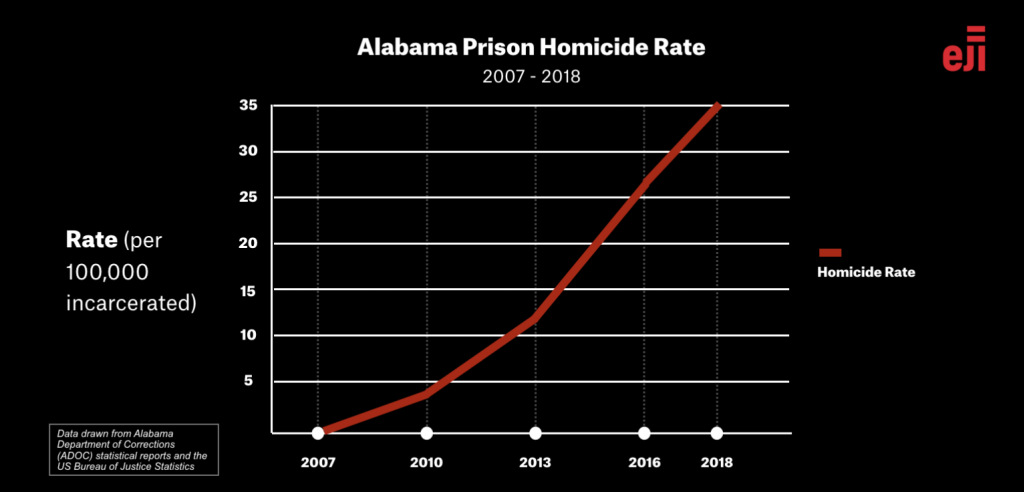
“Alabama’s rate of over 34 homicides per 100,000 people incarcerated is more than 600 percent greater than the national average from 2001 to 2014 … (Last) week’s violence at Holman along with violent incidents at Elmore and St.Clair have created an unprecedented crisis in Alabama prisons with regard to the safety of prisoners and staff.”
This is our fault — the fault of our politicians, the fault of our justice system, the fault of our voters who have not used the ballot to force sweeping reforms in this inhumane situation.

Understand that we are not naive about prisons. They are compounds of steep personal restrictions, a place to house the convicted, a way to protect the populace from those who rob, steal, rape and kill. They are not, and should not be, compounds of comfort.
But the imprisoned are humans, and they deserve basic protections given to all Alabamians. On this, our prison system is failing.
The incremental improvements in the size of Alabama’s inmate population have failed to prevent this appalling number of homicides.
The Legislature’s efforts to ward off federal intervention in our prisons have failed to radically change the reality inside the Department of Corrections.
And Alabamians — including us — have failed to fully understand how profound this problem is.
No state has a prison system more lethal than Alabama’s, where, the EJI writes, “thousands of prisoners (are) vulnerable to abuse, assaults and uncontrolled violence.” Our prisons exist for a reason. They shouldn’t be Marriotts for the convicted. But they shouldn’t be killing fields, either. And that’s on us.

Published By the editorial board of The Anniston Star here

Alabama’s Prisons Are Deadliest in the Nation

Data drawn from Alabama Department of Corrections (ADOC) statistical reports and the US Bureau of Justice Statistics.


On Monday December 3rd, Vaquerro Kinjuan Armstrong, was murdered at Holman Correctional Facility.  It follows the stabbing death of James Lewis Kennedy at Elmore Correctional Facility on November 18, 2018.  This violence reflects new findings which show that Alabama’s prisons are the most lethal in the nation.  With 19 homicides in the last two years, and nine homicides in 2018, Alabama’s rate of over 34 homicides per 100,000 people incarcerated is more than 600 percent greater than the national average from 2001 to 2014.

Over the last decade, there has been a dramatic increase in the level of violence in Alabama state prisons.  Serious understaffing, systemic classification failures, and official misconduct and corruption have left thousands of prisoners vulnerable to abuse, assaults and uncontrolled violence.  

St. Clair Correctional Facility witnessed three homicides this year alone. In 2018, the homicide rate at St. Clair is set to exceed 300 homicides per 100,000 incarcerated people.  

Thirty-five prisoners have been murdered in ADOC facilities in the past five years.  Nine of the homicides occurred at St. Clair.  Twenty-one of the homicides occurred at medium security facilities: seven at Elmore, four at Bullock, four at Bibb, and four at Staton, one at Ventress and one at Kilby. This week’s violence at Holman along with violent incidents at Elmore and St.Clair have created an unprecedented crisis in Alabama prisons with regard to the safety of prisoners and staff.  

The mortality rate within Alabama prisons is at a record level. The number of deaths in Alabama prison, many of which are from non-natural causes including homicide, suicide, and drug overdoses greatly exceed what other states are seeing. The mortality rate in Alabama’s prisons has more than doubled over the past 10 years. Between 2008 and 2014, Alabama’s prison population decreased by 2 percent from 25,303 to 24,816 while mortality in Alabama prisons nearly doubled, going from 61 deaths in 2008 (241 per 100,000 people incarcerated) to 111 in 2014 (447 per 100,000 incarcerated). This trend continued in 2017 as the prison population fell 14 percent to 21,213 even as 120 people died in ADOC facilities, for a mortality rate of over 565 per 100,000 incarcerated people. This is more than double the national mortality rate of 275 deaths per 100,000 incarcerated people in 2014 (the most recent year in which data is available) and makes Alabama an outlier among its neighboring Southern states of Georgia, Tennessee, and Mississippi.

Data drawn from Alabama Department of Corrections (ADOC) statistical reports and the US Bureau of Justice Statistics.

Documented instances of abuse by correctional staff have aggravated the culture of violence within state prisons. EJI filed a complaint with the Department of Justice in 2013 after an investigation revealed a pattern of excessive physical violence at Elmore, where correctional staff at the highest levels have been found to have engaged in extreme and excessive violence against inmates. In multiple incidents, correctional officers at Elmore illegally stripped and beat inmates while they were handcuffed and shackled, and have punched, kicked, and struck them with batons and other objects.

“The conditions are getting worse, and state officials must act now,” said EJI Attorney Charlotte Morrison. “This epidemic of violence has once again created a crisis that requires a more committed and effective response from state leaders.”

EJI re-initiated its investigation at Elmore this year after receiving dozens of reports of stabbings, assaults, extortion and excessive use of force. Inadequate staffing has created serious security conditions where prisoners are at risk of unprecedented levels of violence. According to multiple sources, a single officer is typically assigned to a dorm of 198 prisoners and there are periods at the prison where a total of eight officers are responsible for managing the entire prison with a population of over 1200 men. As a result of the freedom of movement and absence of staff, stabbings, assaults, and extortion are regular features of daily life.

The data on violence in Alabama’s prisons makes clear that the security crisis in state correctional facilities is worsening and needs an urgent and immediate response from elected officials.

Article originally published here

SPLC: ADOC should be held in contempt for missing mental health staffing deadline

 Published 4:40 p.m. CT Dec. 10, 2018

Ten months after a federal judge ordered Alabama Department of Corrections to increase its mental health staff numbers, the department may be held in contempt for failure to meet required staffing deadlines.

A contempt hearing regarding the matter is scheduled for Tuesday and is part of an extensive ongoing lawsuit regarding health care within Alabama prisons filed by the Southern Poverty Law Center.

Last year U.S. District Judge Myron Thompson called ADOC’s mental health care “horrendously inadequate” and ruled it violated inmates’ constitutional rights.

A February order required ADOC to fulfill the required mental health staffing level (263.2 full-time equivalents or FTEs) by July 1.

ADOC currently has only 76 percent of the required level (201.1 FTEs).

“They (ADOC) have asked to amend, alter or vacate the order that says they have to reach this number of staff and have asked for specific ways of counting the number of staff they have,” said SPLC senior staff attorney Maria Morris. “We have opposed that. I think there are simple, straightforward ways of counting the number of staff hired, and they proposed this deadline so they should meet it. If they haven’t, they should be held in contempt.”

ADOC did not immediately reply to a request for comment or verification of its mental health staffing numbers.

ADOC Public Information Manager Bob Horton said last week ADOC has increased the department’s mental health staff by 24 percent since April.

The SPLC filed the motion to hold ADOC in contempt for violation of the order one day after it missed the July 1 deadline.

Judge Thompson granted the motion and during a September contempt hearing, ADOC asked for clarification as to what the order required in terms of staffing.

The hearing was then postponed pending mediation between the two sides, and Thompson later clarified that ADOC was required to staff 263.2 FTEs, a number ADOC listed in its 2017 health care provider request-for-proposal as the minimum staffing requirement. That RFP eventually resulted in ADOC contracting with health care service vendor Wexford Health Sources.

At the time of Thompson’s initial ruling last year, 19 percent of Alabama’s inmates were diagnosed with mental illness.

The mental health care concerns being litigated were made real during the trial by the suicide of Jamie Wallace, a mentally ill inmate who committed suicide 10 days after testifying to the lack of care in Alabama prisons in December 2016.

According to court filings, Wallace went on suicide watch five days after his testimony. After his death, plaintiffs’ attorneys said “records produced thus far” showed no counseling was provided to Wallace during or after his time on suicide watch. Wallace was left unattended “most of the day of his death,” according to the filing.

“Without question, Wallace’s testimony and the tragic event that followed darkly draped all the subsequent testimony like a pall,” Thompson wrote in his decision.

In Fiscal Year 2018, which the Alabama Department of Corrections uses to report its data, seven people were killed and six committed suicide. Nearly 40 inmates attempted suicide.

SPLC attorneys have acknowledged that ADOC faces a difficult road to address due to the costs associated with hiring more staff, but Morris said ADOC has no choice but to provide adequate health care in prisons.

“One thing we don’t have a choice about is providing constitutional conditions, and if we want to have the size of prisons system that we currently have, we have to pay more for it,” Morris said. “We have to pay to have more guards and pay to have more mental health staff. If we can’t decide to pay more for it we need to downsize the system because we need the guards and we need the mental health staff.”

Reporter Melissa Brown contributed to this report. 

Mississippi DOC lowers phone call rates

The cost of inmate phone calls is now less than 4 cents per minute at all state-operated facilities in Mississippi, with the three privately ran prisons soon following suit.

The call rate is dropping from 11 cents per minute to .039 cents per minute under a new agreement with Global Tel*Link (GTL) Corp.

Alabama Department of Corrections has contracted with ICSolutions and charges $0.21 cents per minute in addition to the $3.00 charge that is applied anytime you add funds to the account.

“The reduced rate will make services even more accessible and affordable for inmates’ families and loved ones,” said Commissioner Pelicia E. Hall. “Family members will be able to stay in touch with their loved ones without worrying about the cost. We realize that family contact is very important for rehabilitation.”

The MDOC last dropped rates in March 2016 when the FCC mandated lower rates per minute for calls in prison systems.

From March 2016 to January this year, inmates made 3,599,018 calls and talked for 37,028,605 minutes at state-operated facilities, including the Mississippi State Penitentiary at Parchman, Central Mississippi Correctional Facility, and South Mississippi Correctional Institution.

In January alone, 188,764 calls were made, additionally the new contract calls for equipment and technology to aid the department’s efforts to control contraband cellphones inside prison walls.

So it begs the question, if Mississippi can do it, why can’t Alabama?

It’s A Fact: Women & Girls Have Vastly Different Pathways into the Justice System than Men.

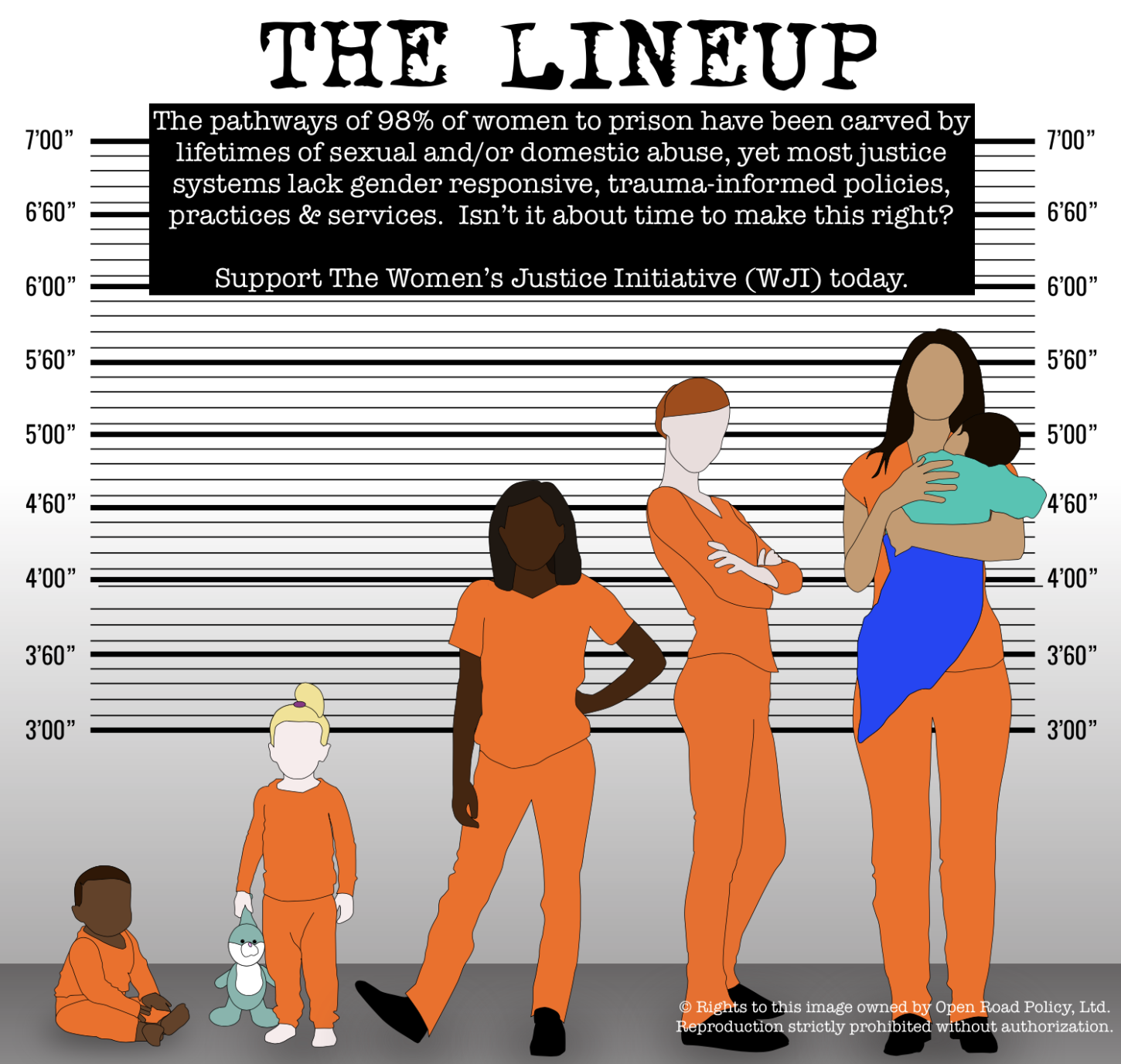
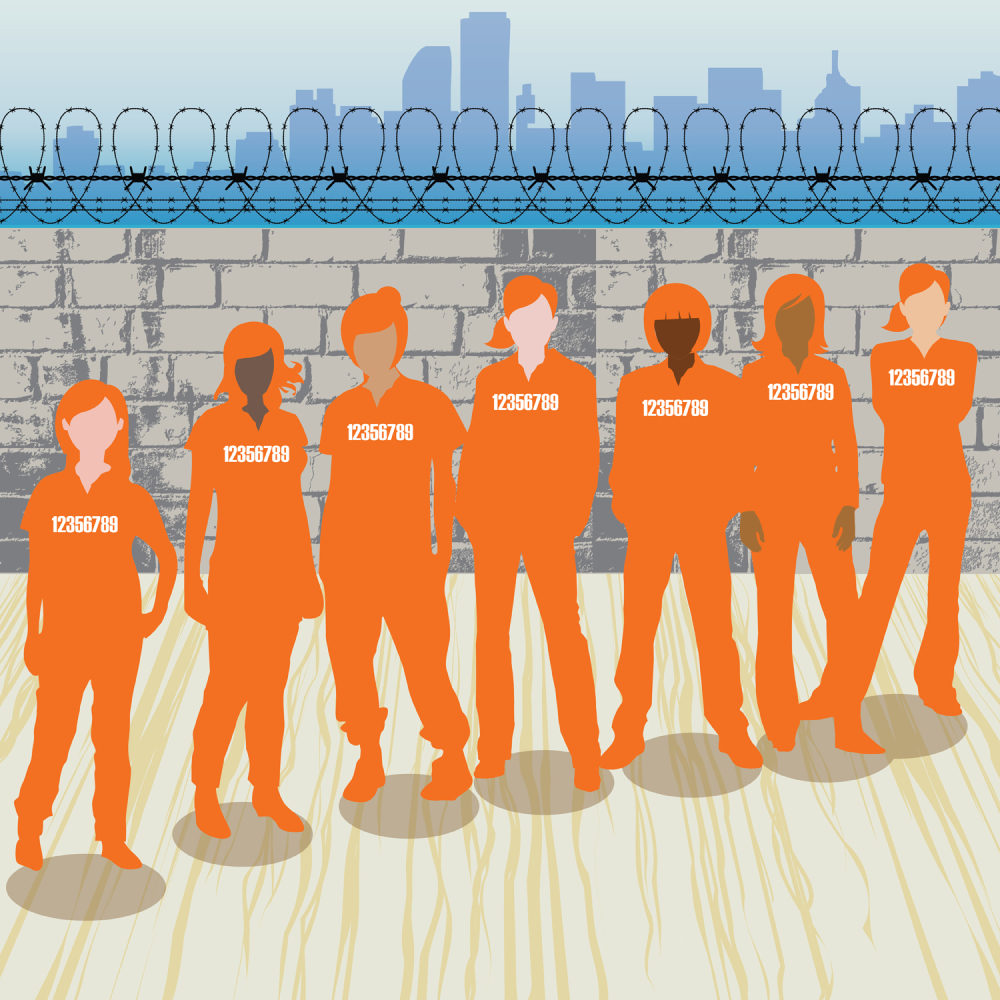
The lineup. The pathways of 98% of women to prison carved by lifetimes of sexual and domestic abuse.

​​​​​​
Gender Responsive Justice Systems Matter.
A powerful body of literature reveals important differences in the reasons underlying men and women’s criminal involvement. The research conducted on women’s specific “pathways” into crime indicates that their experiences of victimization and abuse, poverty, mental illness and substance abuse play a key role.
Unless otherwise indicated, the data provided in this table was adapted from the document “Ten Truths that Matter when Working with Justice Involved Women” (NRCJIW, 2012), a cogent and comprehensive review of the research on justice-involved women.
https://cjinvolvedwomen.org/wp-content/uploads/2015/09/Ten_Truths.pdf
The US prison system was designed to house a large male population, and is operated by primarily male officers and officials.  
 
Women represent less than 8% of the total US prison population, and their unique risks, strengths and needs are often eclipsed throughout  systems lacking in gender responsive practices. 
 
Despite this fact, women are the fastest growing prison population:  The number of women in prison grew 800% vs. 400% in the past 30 years.  

Justice-Involved Women:  United States vs Illinois Trending

The following data was developed for the “The Gender Informed Practice Assessment” Report on Logan Correctional Center.
Disproportionate H​​istories of Abuse and Trauma
  •  ​​​The vast majority of women in prison have experienced interpersonal or sexual violence, with estimates as high as 90%.[i]
  • Histories of interpersonal violence are prevalent among both men and women in prison, but rates are much higher among women.[ii]
  • Incarcerated women with posttraumatic stress disorder (PTSD) report a much higher rate of witnessing violence than the female population in general.[iii]
  • Trauma such as sexual victimization is linked to mental health, substance abuse, and relationship difficulties and contributes to crime pathways for women. Women with histories of abuse and neglect are 77% more likely to be arrested as an adult than their peers who were not abused.[iv]
  • The correctional environment is full practices that trigger women’s past trauma, including pat downs and strip searches, frequent discipline from authority figures, and restricted movement.[v]
  • In Illinois, 98% of incarcerated women in state prisons have experienced physical abuse at some point in their lives; 75% experienced sexual abuse and 85% experienced intimate partner stalking and emotional abuse.[vi]
[i] Miller, N. A., & Najavits, L. M. (2012). Creating trauma-information correctional care: A balance of goals and environment. European Journal of Psychotraumatology.
[ii] Baglivio, M. T., Epps, N., Swartz, K., Huq, M. S., Sheer, A., & Hardt, N. S. (2014). The Prevalence of adverse childhood experiences (ACE) in the lives of juvenile offenders. Journal of Juvenile Justice, 3(2).
[iii] Hackett, M. (2009). Commentary: Trauma and female inmates: Why is witnessing more traumatic? Journal of the American Academy Psychiatry Law, 37(3), 310–315.
[iv] Widom, C. S. & Kuhns, J.B. (1996). Childhood victimization and subsequent risk for promiscuity, prostitution, and teenage pregnancy: A prospective study. American Journal of Public Health 86 (11): 1607.
[v] Miller, N. A., & Najavits, L. M. (2012). Creating trauma-information correctional care: A balance of goals and environment. European Journal of Psychotraumatology.
Benedict, A. (2014).  Using Trauma-informed Practices to Enhance Safety and Security in Women’s Correctional Facilities.  National Resource Center on Justice Involved Women. Retrieved from https://www.bja.gov/Publications/NRCJIW-UsingTraumaInformedPractices.pdf
[vi] Reichert, J., Adams, S., & Bostwick, L. (2010). Victimization and help-seeking behaviors among female prisoners in Illinois. Chicago, IL: Illinois Criminal Justice Information Authority.

Higher Rates of Reported Mental Illness

  • Nationally, female inmates report higher rates of mental health problems than male inmates (73% of females versus of 55% of males in state prisons).[i]
  • Nationally, women in prison have more frequent suicide attempts than male inmates.[ii]
  • Incarcerated women with a history of trauma and accompanying mental health concerns are more likely to have difficulties with prison adjustment and misconduct.
  • Justice involved women are more likely to experience co-occurring disorders; in particular, substance abuse problems tend to be interlinked with trauma and/or mental illness. The majority of women who suffer from mental illness also have substance abuse disorders.
  • Women experience mental illness differently than men; Post-Traumatic Stress Disorder (PTSD), anxiety, depression, and eating disorders are all more prevalent in justice-involved women than in men.
  • The lack of trauma-informed practices and inadequate access to mental health services, combined with the experience of confinement, pose a greater risk of either creating or exacerbating mental health issues among female inmates. Also, correctional policies and procedures – and institutional environments in general – can trigger previous traumatic experiences, exacerbate trauma-related symptoms, and interfere with a woman’s recovery.
  • In Illinois, the percentage of all incarcerated women on a mental health caseload is 58% compared with 25% of all incarcerated men. Logan Correctional Center, the state’s largest women’s prison, currently houses an estimated 770 women prisoners diagnosed as Seriously Mentally Ill (SMI). In addition, a study of all women incarcerated statewide indicated that an estimated 60% have suffered from PTSD.[iii]
Note: While data regarding the need to address diagnoses of “Serious Mental Illness” among incarcerated women is compelling, it is important for corrections systems to explore their use of the category “Seriously Mentally Ill” and ensure that 1) appropriate clinical criteria are being used and adhered to when identifying someone as SMI, and 2) gender, culture, trauma, oppression and other factors are thoroughly considered so that women are not inappropriately diagnosed.
[i] US Department of Justice. (2006). Mental health problems of prison and jail inmates.
 [ii]James, D. J., & Glaze, L. E. (2006). Mental health problems of prison and jail inmates.;  Bedard, L., E. PhD (2008) Women in Corrections. Retrieved from http://www.correctionsone.com/women-in-corrections/articles/1843155-Female-vs-male-inmates-The-rewards-and-challenges-of-managing-both/
 [iii] Reichert, J., & Bostwick, L. (2010). Post-traumatic stress disorder and victimization among female prisoners in Illinois.

 ​​Disproportionate Involvement of Women of Color

  • Nationally, African American women are incarcerated at twice the rate of white women, and rates among Hispanic women are 1.2 times higher.[i] These rates perhaps most dramatically impact younger women: A 2012 study revealed that black females ages 18 to 19 were three times more likely to be imprisoned than white females, and Hispanic females in this age group had imprisonment rates nearly twice those of white females.[ii]
  • In Illinois, most state prison admissions for men and women in general, and particularly those of Color, are from Cook County. A decline in admissions from Cook County between FY2005 and FY2010 resulted in a decrease in the overall proportion of African American women incarcerated in state prisons (from more than 70 percent in the late 1990s to less than 50 percent among the FY2010 female court admissions).  Commensurately, the shift resulted in an increase in the proportion of white females from 20% to nearly 50% in that same period, while Hispanic women experienced a slower, more gradual shift from 2-3% in 1989 to 7.8% today.[iii]
In Illinois, while disproportionality has trended downward, African American women still represent 42% of the women’s prison population, while African American citizens represent only 15% of the Illinois population. Conversely, White women represent 51.4% of the women’s prison population and White citizens represent 73.5% of the Illinois population. [iv]
[i] Carson, E.A. (2015). Prisoners in 2014. Washington, D.C.: Bureau of Justice Statistics.
[ii] US Department of Justice. (2013). Prisoners in 2012
[iii] Olson, D., Escobar, G. & Stalans, L. (2011) An Examination of admissions, exits and end-of-the-year populations of adult female inmates in the Illinois Department of Corrections, state fiscal years 1989 to 2010. Chicago, IL: Loyola University Chicago, Department of Criminal Justice & Criminology
[iv] IDOC Offender 360 Report  (2016).  US Census Data.

​​Higher Rates of Substance Abuse & Drug Crimes

  • A large proportion of justice-involved women have abused substances or have engaged in criminal behavior while under the influence and/or to support their drug use.
  • In a 2006 Bureau of Justice Statistics study, over 60% of women reported a drug dependence or abuse problem in the year prior to their incarceration. Moreover, there is evidence indicating that current substance abuse among women is a strong direct predictor of prison readmission.
  • Substance abuse among justice-involved women may be motivated by a desire to cope with or mask unpleasant emotions stemming from traumatic experiences and ensuing mental health problems.
  • Nationally, on every measure of drug use, women in state prisons have reported higher usage (40%) than males (32%).[i] In addition, 25% of female prisoners serve time for drug offenses, compared to 15% of male prisoners.[ii]
  • In Illinois, 85% of women surveyed in state prisons reported periods of regular alcohol and drug use and an average age of onset at 16.3 years old.[iii]
  • In Illinois, nearly the entire increase in court admissions of women to state prisons from FY1996 to FY2005 that led to the skyrocketing prison population were attributed to low-level, Class 4 felonies for drug and property crimes. Conversely, the dramatic 40% decline in female court admissions from FY2005 to FY2010 was also linked to a reduction in court admissions for primarily the same class of low-level drug crimes.[iv]
[i] US Department of Justice (1999). Women Offenders. Note: This is self-reported data. Actual number of offenders with substance abuse histories is approximately 80 percent (national data).
[ii] US Department of Justice. Prisoners in 2013 (2014).
[iii] Reichert, J., Adams, S., & Bostwick, L. (2010). Victimization and help-seeking behaviors among female prisoners in Illinois.
[iv] Olson, D., Escobar, G. & Stalans, L. (2011) An Examination of admissions, exits and end-of-the-year populations of adult female inmates in the Illinois Department of Corrections, state fiscal years 1989 to 2010. Chicago, IL: Loyola University Chicago, Department of Criminal Justice & Criminology
 More Likely to be the Custodial Parent of their Children
  • Nationally, more than 60% of women prisoners are parents, and women prisoners are more likely than men to serve as the custodial parent of their children.[i]  According to a  Bureau of Justice Statistics (BJS) report, 77% of mothers in state prison who lived with their children just prior to incarceration provided most of the children’s daily care, compared to 26% of fathers. 88% of incarcerated fathers identified the child’s other parent as the current caregiver, compared to 37% of mothers.”[ii]
  • The Annie E. Casey Foundation found that Illinois has the 7th highest number of individuals who have experienced parental incarceration during their childhood, totaling 186,000.
  • Children of incarcerated parents “…display short-term coping responses to deal with their loss, which can develop into long-term emotional and behavioral challenges, such as depression, problems with school, delinquency, and drug use.”[iii]  Children of incarcerated mothers in particular are at greater risk of dropping out of school and academic challenges.[iv]
  • “Preserving a child’s relationship with a parent during incarceration benefits both parties. It also benefits society, reducing children’s mental health issues and anxiety, while lowering recidivism and facilitating parents’ successful return to their communities.”[v]
  • In Illinois, a snapshot of the women incarcerated at Logan Correctional Center in October 2015 indicated that 71% of them (1,304 out of 1,835) are mothers of a total of 3,700 children.​
[i] Glaze, L. E., and Maruschak, L. M. (2009). Parents in prison and their minor children.; Ney, B. Ten facts about women in jails. Retrieved from http://www.americanjail.org/10-facts-about-women-in-jails/ 
[ii] Glaze, L. & Maruschak, L. (2008) Parents in prison and their minor children.
[iii] Hatzenbuehler, M. L., Keyes, K., Hamilton, A., Uddin, M., & Galea, S. (2015). e collateral damage of mass incarceration: Risk of psychiatric morbidity among nonincarcerated residents of high-incarceration neighbor- hoods. American Journal of Public Health, 105(1), 138–143. Retrieved from www.ncbi.nlm.nih.gov/ pubmed/25393200
[iv] Dallaire, D. H. (2007, December). Children with incarcerated mothers: Developmental outcomes, special challenges, and recommendations. Journal of Applied Developmental Psychology, 28(1), 15–24.
[v] Annie E Casey Foundation (April 2016) “A Shared Sentence: The Devastating Toll of Parental Incarceration on Kids, Families & Communities; La Vigne, N. G., Davies, E., & Brazzell, D. (2008, February 12). Family and recidivism. AMERICAN Jails, 17–24. Retrieved from www.vera.org/ les/the- family-and-recidivism.pdf.; The Osborne Association. (2012, May).
Higher Rates of Poverty & Unemployment
  • Economic hardship, lower educational attainment, fewer vocational skills, underemployment, and employment instability are more common among justice-involved women. These factors are particularly problematic when considering that women are more likely to have child-rearing responsibilities, particularly as single mothers.
  • Compared to men, it is more difficult for justice-involved women to obtain and maintain legitimate and well-paying employment that will meet their family’s needs, both before and following incarceration. Research has indicated that programming designed to enhance women’s educational/vocational skills are effective in reducing their risk of recidivism.
  • Nationally, women report greater levels of poverty than men and less employment history immediately preceding incarceration. In addition, those seeking affordable housing and reunification face considerably greater challenges. [i]
  • A study of the Women’s Prison Association found that 60% of women reported that they were not employed full-time at the time of their arrest (compared to 40% of men) and 37% of women had incomes of under $600 in the month leading to their arrest (compared with 28% of men).[ii]
  • A study conducted by the Urban Institute regarding prisoner reentry suggested greater challenges for formerly incarcerated women seeking employment.  A sample allowed comparisons of the statistical differences between male and females in several states, and indicated 61% of males were employed post release vs 37% of women.[iii]
  • In Illinois, 43.8% of women at Logan Correctional Center, the state’s largest prison, do not have a high school diploma or GED; and one study indicated that approximately 58% of women in Illinois prisons were employed either full- or part-time at the time of their incarceration.[iv]
[i] Ney, B. (2015, January 8). Ten facts about women in jails. Retrieved from http://www.americanjail.org/10-facts-about-women-in-jails/ 
[ii] The Sentencing Project (2007). Women in the criminal justice system. Retrieved from http://www.sentencingproject.org/wp-content/uploads/2016/01/Women-in-the-Criminal-Justice-System-Briefing-Sheets.pdf)
[iii] Returning home: Understanding the challenges of prisoner reentry.  retrieved from http://www.urban.org/center/jpc/returning- home/
[iv] Reichert, J., Adams, S., & Bostwick, L. (2010). Victimization and Help-Seeking Behaviors Among Female Prisoners In Illinois. Chicago, IL: Illinois Criminal Justice Information Authority.  

Lower Public Safety Risk, Yet Fastest Growing Criminal Justice System Population Nationwide

  • Justice-involved women are less likely than men to have extensive criminal histories.
  • Women typically enter the criminal justice system for non-violent crimes that are often drug-related and/or driven by poverty. Nationally, women in state prisons are more likely to be incarcerated for a drug or property offense than a violent crime: 24% of women have been convicted of a drug offense, compared to 15% of men; 28% of women have been convicted of a property crime, compared to 19% of men; and 37% of women have been convicted of a violent offense, compared to 54% of men.[i]
  • The nature and context of violent crime committed by women frequently differs from that observed in men. When women commit aggressive acts, they typically involve assaults of lesser severity that are reactive or defensive in nature, rather than calculated or premeditated. Compared with men who tend to target strangers and acquaintances, violent acts committed by women occur primarily in domestic or school settings, and are more likely targeted at family members and/or intimates.
  • Women released from incarceration have lower recidivism rates than their male counterparts. This holds true for rearrests, reconvictions, and returns to prison with or without new prison sentences. Moreover, for the small proportion of women who are incarcerated for violent crimes, most do not reoffend with another violent crime.
  • Within prisons, incidents of violence and aggression committed by women are extremely low. Studies indicate that incarcerated women are five times less likely than men to commit such acts – 3-5% of women compared to 17-19% of men.
  • Despite women’s lower level crimes, arrest data from 2010 reveal that the number of female arrests in the United States increased by 11.4% from the preceding decade; this increase is in contrast to a 5% decline for male arrests. During the same time period, the number of women incarcerated in federal and state correctional facilities increased by 22%. Women now constitute one-fourth of the probation and parole population, representing a 10% increase over the past decade.
  • In Illinois, 34% of women in state prisons are incarcerated for a violent offense, compared with 43% of male inmates.  Women are also more likely to be incarcerated for a drug crime (29% vs 21%) or a property crime (30% vs 19%).[ii]
[i] Carson, E.A. (2015). Prisoners in 2014. Washington, DC: Bureau of Justice Statistics. Retrieved from http://www.sentencingproject.org/wp-content/uploads/2016/02/Incarcerated-Women-and-Girls.pdf
[ii] Illinois State Commission on Criminal Justice Reform (2015). Illinois prison overview. Retrieved from http://www.icjia.org/cjreform2015/research/illinois-prison-overview.html
article originally published here images are copyright of their respective owners

The Women’s Risk Needs Assessment: Putting Gender at the Forefront of Actuarial Risk Assessment

Published by Breanna Boppre & Emily Salisbury12th April 2016

Women have distinct pathways to offending to men, often marked by violence, abuse, trauma, mental illness and unhealthy relationships – all factors which translate into needs and risk factors for reoffending. However, traditional risk and need assessments are designed with male offenders in mind. This blog post by criminologists, Breanna Boppre and Emily Salisbury of the University of Nevada, Las Vegas, summarises the gender-specific risk assessment that was designed specifically for women in the U.S. to bring gender to the foreground of offender rehabilitation.

SPLC: Alabama prisons must address staffing needs and accept monitoring of failing mental health treatment

article published 10/20/2017 & originally posted here

An Alabama Prison
An Alabama Prison

The Alabama Department of Corrections (ADOC) must conduct a meaningful analysis of the staffing it needs to address an unconstitutionally inadequate level of care for prisoners who have mental illnesses, according to a brief filed in federal court yesterday by the SPLC.

ADOC will likely need more than double its current level of correctional staffing and nearly triple its mental health staffing, according to the brief. Additionally, the court should appoint security and mental health monitors to ensure that ADOC is carrying out the court-approved remedies, the brief states.

The filing is in response to a plan that ADOC proposed to the federal court last week, claiming that it would increase spending for mental health care workers – and would double staffing in those positions – but only if the state legislature provides enough funding next year.

“Compliance with the U.S. Constitution is not optional, and the state can delay no longer. Mental health staffing is woefully inadequate in ADOC prisons, and the flagrant constitutional violations that result must be addressed immediately in order to protect prisoners with mental illnesses from an ongoing risk of serious harm,” said Maria Morris, senior supervising attorney with the SPLC. “ADOC’s plan to remedy these glaring staffing deficiencies is vague, unsubstantiated and incomplete. It must address these issues now.”

The filing is the latest development in the SPLC’s ongoing litigation against ADOC for failing to provide adequate medical and mental health care for people in its custody. U.S. District Court Judge Myron Thompson issued a sweeping, 302-page ruling in June declaring the mental health care system in Alabama prisons “horrendously inadequate.”

The court specifically found that “persistent and severe shortages of mental-health staff and correctional staff” are among the overarching issues that contribute to the inadequacy of mental health care in ADOC prisons.

The court also found that ADOC’s mental health caseload is substantially lower than the national average, and that this failure to identify prisoners with mental health needs is the result of a number of factors, including “insufficient mental-health staffing.”

Recruiting and retaining adequate staff will take time and funding, but ADOC already has the authority and funding to hire some correctional staff right now. For example, ADOC does not need legislative approval to fill its existing, authorized staffing levels.

“Throughout this case, the court has repeatedly made it clear that lack of funds is not an excuse for ADOC’s failure to provide constitutionally mandated care to prisoners with mental illnesses,” Morris said. “ADOC officials have known for years that they need more staff, but they have delayed addressing the problem. Now, they want to delay even further, leading to more pain, suffering and possibly even death.”

Morris said: “The state has an immediate duty to hire enough qualified staff to address the crisis in care for the mentally ill. Over the long term, however, the only solution to this and other problems in the Alabama prison system is to decrease the prison population by getting people the help they need to stay out of prison in the first place. The state should ensure that people with mental illness get treatment, instead of just locking them up and throwing away the key.”


Attorneys say Alabama prison plan inadequate, vague

The Associated Press

MONTGOMERY, Ala. (AP) — Alabama’s plan to improve correctional and mental health staffing in state prisons is vague and inadequate, attorneys for inmates told a federal judge last week.

The attorneys for inmates criticized the state’s proposal submitted to U.S. District Judge Myron Thompson.

“Commissioner Jefferson Dunn and Associate Commissioner Ruth Naglich appear not to recognize that they have been found to be running a correctional system that provides horrendously inadequate mental health care,” wrote Maria Morris, an attorney representing the inmates.

Thompson ordered Alabama to overhaul conditions in June after finding that psychiatric care of state inmates is so “horrendously inadequate” that it violates the U.S. Constitution’s ban on cruel and unusual punishment. One of the inmates committed suicide days after testifying in federal court about his treatment in prison.

Thompson ordered the state to submit a plan to address shortages of correctional and mental health staff.

The Department of Corrections told the judge in a filing this month that it was increasing staff and conducting a comprehensive analysis to determine security staffing needs, and had begun some of those steps before Thompson’s ruling.

Inmates’ attorneys argued the state should have deadlines for increasing staff and benchmarks for caseloads or the plan “will remain nothing more than words.”

Thompson scheduled an Oct. 30 hearing on plaintiffs’ request for additional information about the state’s plan.