In the American criminal justice system, wealth, not culpability, shapes outcomes.

Article originally published here
American criminal justice system where culpability takes a backseat to money
The American criminal justice system, where the poor are unfairly disadvantaged at every stage of the proceedings.

In the American criminal justice system, wealth, not culpability, shapes outcomes. Indigent people are unfairly disadvantaged at every step in a system that treats the rich and guilty better than the poor and innocent.

In many jurisdictions in the United States, people who are arrested and do not have money to pay bail are jailed while awaiting trial. While some people are denied bail because they are at risk of flight or illegal activity, most are detained solely because they are too poor to pay bail. Pretrial detention interferes with employment, payment of bills, and care giving, and can inflict extraordinary psychological damage. Even for minor offenses, people who are detained pretrial are more likely to be incarcerated and more likely to receive a longer sentence.

Defendants facing a felony charge, those charged with misdemeanors who could be jailed, convicted defendants filing a first appeal, and juveniles charged with delinquency all have a constitutional right to counsel, but poor people in most jurisdictions do not get adequate legal representation. Only 24 states have public defender systems, and even the best of those are hampered by lack of funding and crippling case loads. Defendants too poor to post bail can spend months in jail waiting for a lawyer to be appointed. Many poor people charged with misdemeanors appear in court hearings without a lawyer, where they must make the untenable choice of pleading guilty and being released (burdened by fines, court costs, and other collateral consequences of a criminal conviction that they cannot afford) or remaining in jail indefinitely waiting for a lawyer. Indigent defense in America is so bad that the nation’s top prosecutor, then-Attorney General Eric Holder, declared it is “in a state of crisis.”

It is illegal to imprison people because they are too poor to pay a fine, but shocking numbers of poor people have been jailed for being unable to pay fines and fees incurred for minor infractions and misdemeanors. Courts have contracted with for-profit, private probation companies to collect fines from people on probation. The companies tack on their own fees, often $80-100 a month, which escalate if not immediately paid. Private probation companies profit from requiring probationers to pay for drug treatment, electronic monitoring, and myriad other services they are required to participate in as a condition of their supervision. Impoverished people with fines of a few hundred dollars can end up owing thousands, and if they cannot pay, their probation is revoked and they are jailed.

Jurisdictions in nearly every state impose “pay-to-stay” fees on incarcerated people for everything from medical costs to food and clothing. In the last few decades, additional fees have proliferated, including charges for police transport, case filing, felony surcharges, electronic monitoring, drug testing, and sex offender registration. Forty-three states and the District of Columbia allow fees to be charged for using a public defender. A defendant can emerge from the system owing thousands of dollars in fees.

People leaving prison face huge obstacles to obtaining employment, housing, and other social services; those convicted of felony drug offenses may be barred from receiving federal housing and cash assistance and food stamps. Many also are burdened by staggering child support arrears, drug and alcohol testing fees, parole supervision fees and fees for drug treatment and other programs that are conditions of their parole.
Cory Booker And Elizabeth Warren Want To Treat Women In Prison Like Human Beings

Article originally published here by Melisa Jeltsen
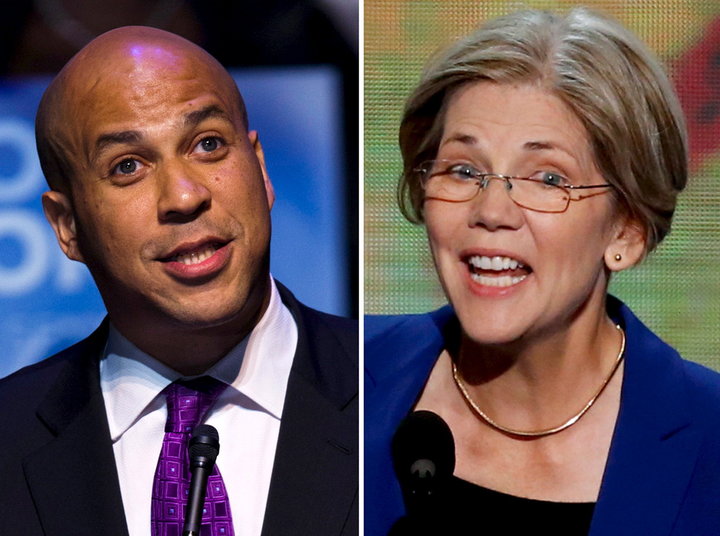
REUTERS PHOTOGRAPHER / REUTERS Senators Cory Booker and Elizabeth Warren want to improve the lives of incarcerated women.

A bill they’re sponsoring would require federal prisons to provide free tampons and pads, and would ban shackling of pregnant women.

Two Democratic senators unveiled a bill on Tuesday that aims to drastically reform how the U.S. federal prison system treats women behind bars, a segment of the incarcerated population that is often overlooked despite its rapid growth.

Sens. Cory Booker (N.J.) and Elizabeth Warren (Mass.) introduced The Dignity for Incarcerated Women Act at a press conference Tuesday. The bill, which also had Sens. Kamala Harris (Calif.) and Dick Durbin (Ill.) as co-sponsors, would require federal prisons to provide free, quality sanitary napkins and tampons to female inmates, and would ban shackling them during pregnancy or placing pregnant women in solitary confinement.

At the heart of the bill are proposals that would make it easier for women to maintain strong family ties with their children while in prison. It requires that the Federal Bureau of Prisons consider the location of children when deciding where to place an inmate, and to create policies that make it easier for inmates to communicate with their families. These include longer and more frequent visiting hours, allowing physical interactions during visits, and not charging for phone calls.

“It is in the societal interest to support families when members of those families are incarcerated,” Booker told HuffPost. “We do unnecessarily harsh things that are not necessary for public safety, but really punish women and punish their families as a whole.”

Men make up the bulk of America’s imprisoned population, but the number of women behind bars has soared over the past few decades to more than 200,000 as of 2014, and women are now the fastest growing segment. (Compared internationally, the U.S. incarcerates women at a higher rate than every country but Thailand).

The legislation would affect the nearly 12,695 women in federal prisons ― almost 60 percent of whom were convicted of drug offenses ― but not those in state prisons and local jails, where the majority of women are held.

Most women locked up in the U.S. are mothers, and many have histories of drug use, mental health problems, and were victims of sexual or physical violence before their involvement in the criminal justice system.

The bill comes at a time of growing national concern about the need for criminal justice reform. While most of the discussion focuses on men, the popular Netflix show, “Orange Is The New Black,” has highlighted the plight of women behind bars, and touched on many of the issues that the bill seeks to address: a lack of proper access to feminine hygiene products, the trauma histories of the inmates, and the difficulty of parenting from prison.

We need to create a prison that, yes, is holding people accountable, and yes, is allowing people to pay their debt to society for mistakes they have made, but also is about the dignity of humanity. 

Sen. Cory Booker

While many prisons do provide a limited amount of feminine hygiene products, they are often of poor quality and not useful. That means women are in the uncomfortable situation of either having to ask correctional officers for more ― which can be demeaning and raise the risk of abuses ― or use limited funds to buy them at the commissary.

“Considering the fact that 72% were living in poverty prior to being incarcerated, that often isn’t feasible,” said Jesselyn McCurdy, senior legislative counsel at the ACLU.

In 2008, the Federal Bureau of Prisons announced it would no longer shackle pregnant women during labor. But women are still allowed to be shackled while pregnant, which the bill would prohibit.

The legislation was met with approval by prison reform advocates.

“This bill could mark a profound shift toward treating people within our prisons as whole and feeling humans with a desire to do better for themselves and their families,” said Diana McHugh, director of communications for the New York-based Women’s Prison Association. “We hope to see similarly well-informed policies at the city and state level, as well as a general shift toward alternatives to incarceration that promote public safety without prison.”

Judith Resnik, a professor at Yale Law School, said that while the bill would provide an important step forward, sentencing reform is also needed. “Many women are over-incarcerated,” she said.

Booker said women in prison are “in need of therapy, in need of healing, and in need of support,” and called the criminal justice system profoundly unjust.

“We need to create a prison that, yes, is holding people accountable, and yes, is allowing people to pay their debt to society for mistakes they have made, but also is about the dignity of humanity,” he said. “We’ve got to be a better society than this.”

This article has been updated to reflect that Sens. Durbin and Harris signed on as sponsors late Monday prior to the introduction of the bill.

Criminal Justice Reform in Alabama

Article originally published here
Criminal justice reform desperately required, especially for women in Alabama
Criminal justice reform desperately required, especially for women incarcerated in Alabama

Alabama’s criminal justice system is in crisis. Mass incarceration, severe prison overcrowding, budget-busting costs and unfair sentencing have created conditions and practices that threaten the state’s resources and basic human rights. Alabama’s criminal justice system has marginalized thousands of residents and devastated many poor and minority communities while failing to improve public safety in any appreciable way. Many criminal justice policies have contributed to endemic hopelessness and dysfunctional and criminal behavior and have proven to be very ineffective.

The costs of many criminal justice policies have additionally created a fiscal crisis. Education spending and state planning and development have been undermined by out-ofcontrol prison costs and financial demands generated by sentencing policies and misguided practices.

These problems have been fostered by a lack of information and critical analysis and shielded by a legal and political culture that is fearful of sensible reform unless it appears “tough on crime.” This report provides a critical assessment of many criminal justice issues in the hope that more informed debate, dialogue and decision-making can take place in Alabama.

This report addresses sentencing, probation, prison conditions and parole in Alabama. Alabama’s sentencing laws, ineffective use of probation, unregulated and politicized parole procedures and an underfunded prison system have conspired to create one of the highest incarceration rates in the world. The consequences are devastating for poor people and people of color as well as Alabama’s economic, social and political health. Alabama’s political and legal culture allows politicians to use prisons and punishment to manage social and health care problems. This ill-advised approach has resulted in record deficits and a fiscal crisis that creates both a serious threat to public welfare and an opportunity for significant reform.

You can read the full report here

Federal Court Rules Alabama Prisons “Horrendously Inadequate”

St. Clair Dorm
St. Clair Dorm
Article originally published here June 28th 2017

A federal court ruled yesterday that Alabama fails to provide constitutionally adequate mental health care to people in state prisons, finding that mental health services are “horrendously inadequate” and have led to a “skyrocketing suicide rate” among incarcerated people.

In a 302-page opinion, the court detailed “serious systemic deficiencies,” including the failure to identify prisoners with serious mental health needs and inadequate treatment for suicidal prisoners. It found that Alabama prisons discipline mentally ill prisoners for the symptoms of their illnesses and segregate them for prolonged periods. Rather than providing effective treatment, Alabama prisons are “warehousing” the mentally ill, the court wrote.

Evidence presented during a two-month trial that ended in February demonstrated that the state has shown “deliberate indifference” to the unconstitutional conditions in state prisons. “Officials admitted on the stand that they have done little to nothing to fix problems on the ground, despite their knowledge that those problems may be putting lives at risk,” the court found.

The court further found that “staffing shortages, combined with persistent and significant overcrowding, contribute to serious systemic deficiencies in the delivery of mental-health care.” Alabama is an outlier in its refusal to enact meaningful sentencing reforms to address its prison overcrowding crisis, and so the state’s prisons continue to hold double (190 percent) their design capacity and have the highest inmate-to-officer ratio in the country.

During the trial, Jamie Wallace testified about the Department of Corrections’s failure to provide him with treatment, telling the court he received only minimal attention from mental health staff even when he was on suicide watch. Less than a month after he testified, Mr. Wallace died by suicide, alone and unmonitored in his prison cell. The court wrote that Mr. Wallace’s case “is powerful evidence of the real, concrete and terribly permanent harms that woefully inadequate mental-health care inflicts on mentally ill prisoners in Alabama.”

The court ordered the parties to discuss a remedy, emphasizing that “given the severity and urgency of the need for mental-health care explained in this opinion, the proposed relief must be both immediate and long term.”

The ruling caps the second of three phases of a lawsuit filed in 2014 by the Southern Poverty Law Center, the Alabama Disabilities Advocacy Program, and the law firms Baker Donelson, and Zarzaur Mujumdar & Debrosse.

For far too long, Alabama prisons have been little more than warehouses where many people struggling with mental illness have been hidden away and abandoned by the state,” said Lisa Borden, an attorney with Baker Donelson. “Once locked behind prison walls, in deplorable conditions with little or no treatment, any hope for improvement or recovery was lost, and many became more profoundly ill. We look forward to now having the opportunity for our clients to receive real treatment for their illnesses, and to seeing them afforded the basic dignity to which any human being is entitled.

The lack of mental health care in Alabama’s prison system is representative of broader systemic failures that subject inmates to unconstitutional conditionsEJI’s federal class action lawsuit  on behalf of prisoners at St. Clair Correctional Facility challenges the corrections department’s failure to remedy violent conditions there, and violence, abuses, and poor conditions throughout the state prison system prompted an investigation by the U.S. Department of Justice.

Security is not Safety: Gendered Harms in Women’s Prisons

Barbara Owen 25th May 2017 Article originally published here
Photo: Women’s prison in Karaganda region, Kazakhstan – Karla Nur, 2014

Prisons – by definition – are secure institutions. Shifting philosophies of punishment underpin approaches to security and safety. The mobility, behaviour and activities of those imprisoned are controlled by carceral architecture and structured schedules with policy, practice and personnel reinforcing the custodial demands of imprisonment. Such procedures are designed to prevent escapes and maintain ‘control’ and ‘order’ through security and discipline. My experience in women’s prisons has led me to question this dynamic for imprisoned women: does security create safety? Are women safe while imprisoned? Does security itself create gendered harms of imprisonment?

In the last decade, my work has focused on these questions through two long-term projects. First, I was more than fortunate to be invited to work with the Thailand Institute of Justice (TIJ), a partner of PRI, in addressing the global issues of women in prison. Thailand, through the support of Her Royal Highness Princess Bajrakitiyabha, has led this charge by supporting the development of and implementing the Bangkok Rules, soft laws that offer guidance on human rights protections for women in prison (see PRI’s extensive resources on the Bangkok Rules). Second, I have explored the dimensions of gendered safety in American women’s prisons and jails with James Wells and Joycelyn Pollock through extensive interview, focus group and survey research. These experiences have steered me to question the wide gulf between security and safety – particularly as experienced by women prisoners.

Gendered Harms

As Dana Britton argues, prisons are deeply gendered organisations. In our book, In Search of Safety: Confronting inequality in women’s imprisonment, we build on this insight to examine the harms embedded in the contemporary prison and how these harms impact women differently than men. In documenting women’s experience with imprisonment, we frame these threats to women’s safety as ‘gendered harm’ in two ways. First, and most common, is the idea that harm is damage or injury to a person through overt actions or practice. Clearly, forms of physical and sexual violence against women in custody fit this view. Operational practice grounded in the need for physical security has also been shown to harm imprisoned women. The daily round in prison is often detrimental to women’s well-being, particularly for women with trauma symptoms or other mental health conditions.

Second, we also see gendered harm in terms of the inability or unwillingness to meet women’s pathway needs. Such needs are often unmet inside prison, when they fail to acknowledge the gender-based realities that shape women’s pathways to prison. Such neglect is common in women’s prisons throughout the world. There are overlapping themes relevant to women offenders: providing for their safety, rehabilitation and social reintegration while in custody, requiring that programmes and services address their gender-based needs in terms of health care (including pregnancy), mental health and other therapeutic needs; and recognising their histories as survivors of interpersonal violence, and their caring responsibilities for children. Women’s prisons may be secure but, we ask, are they safe?

We claim these harms are unnecessary and constitute gendered human rights violations. The challenges to safety and well-being of women prisoners are not only problems in America’s prisons. Globally, women in prison face many forms of discrimination and other consequences of gender inequality, reproducing the harms identical to those we find in U.S. prisons.

There are two practical solutions to this unnecessary suffering: expanding the concept of security to include multiple forms of gendered safety, and implementing the human rights protections outlined in the Bangkok Rules.

Continue reading

I retired after 28 years with the Alabama Department of Corrections. The new prison plan is lipstick on a pig.

Article originally published here May 11th 2017

21777652-mmmain

By David Wise, who retired as warden of St. Clair Correctional Facility after 28 years with the Alabama Department of Corrections.

With less than a week left in Alabama’s Legislative Session, our lawmakers are rushing to pass a bill calling for construction of four new prisons – three men’s facilities paid for by local municipalities and leased to the Department of Corrections and one women’s facility built by the state.

David Wise
David Wise

Why are our lawmakers in such a hurry to put lipstick on a pig?

Facilities are not the main problem plaguing Alabama’s criminal justice system; proper funding and staffing necessary to run our prisons constitutionally and humanely are. Bricks and mortar should not take precedent over resources needed to provide adequate security, medical and mental health treatment, and protection to the public.

I retired after 28 years with the Alabama Department of Corrections, working my way through the ranks at four different facilities and the Training Division. I started my career at St. Clair in 1983 – the year it opened – and ended it there as warden.

I know what it takes to successfully run a prison: proper staffing, adequate funding, legislative support, gubernatorial leadership, and a DOC commissioner who advocates and implements change.

We can’t just lock people up and forget about them. We must take care of them. That requires better training for correctional officers, more programming to keep prisoners from idle time that can lead to violence, and quality medical and mental health care.

I agree that some of our facilities could stand to be replaced. But before we spend millions of dollars on new prisons, there are cosmetic repairs and security enhancements that could be made at a fraction of the cost to improve prison conditions and the environment for both prisoners and staff.

Alabama’s prisons are dangerously understaffed with only half as many correctional officers as needed. Starting salaries are lower than other competing law enforcement jobs, the work environment is unsafe with an abysmal officer to prisoner ratio, and mandatory overtime often requires officers to work double shifts.

Better staffing, better pay and better training are all more critical than new prison facilities.

ADOC Commissioner Jeff Dunn has said the four new facilities will be so nice that the obstacles of recruiting and retaining officers will be solved. That makes no sense. Unless the state can boost the starting salary for correctional officers by about $7,000 – on par with starting salaries of state troopers, police officers, and sheriff’s deputies – facilities will remain understaffed, the state will continue to shell out millions in overtime pay, and violence will continue to plague our prisons.

The state claims that the new prison plan, which caps bonds at $845 million and would cost more than $1 billion to pay back, will pay for itself with somewhere between $40 to $50 million in annual savings. A majority of the projected savings comes from reduction in staff and overtime spending. That doesn’t add up. If we fully staff our prisons with competitive wages, those savings won’t be realized. If we fail to fully staff our prisons, overtime pay won’t be saved. Either way, Alabama taxpayers will be left paying for these new prisons.

Another area of predicted savings comes from reduced healthcare expenses.

The Department of Corrections is facing a lawsuit filed by the Southern Poverty Law Center for unconstitutional levels of medical and mental health care. The resolution of these cases will significantly increase health care costs. To provide a constitutional-level of care, prisons are going to need additional doctors, nurses and other medical staff as well as more space to adequately treat incarcerated patients.

Shiny new buildings won’t attract more staff or provide better health care. Spending money on constructing new prisons before addressing the real problems plaguing ADOC is pointless.

I encourage our lawmakers to oppose the prison bill. We must develop a comprehensive approach to effectively fix our overcrowded, understaffed and under-resourced prisons. Doing so will take longer than a few days. After all, billions of dollars and people’s lives are on the line.

Pass the Video Visitation Act – H.R.6441

Campaign created by Jamani Montague
Ask congress to ensure that correctional facilities do not ban in-person visits

Sign this petition asking Congress to ensure that correctional facilities do not ban in-person visits.

Why is this important?

This petition is in support of Congresswoman Tammy Duckworth’s Video Visitation in Prisons Act, which would require the Federal Communications Commission to ensure that correctional facilities that have video visitation services do not ban in-person visits.

U.S. jails and prisons are increasingly using video visitation to replace in-person visits. Some carceral facilities have even taken measures to end in-person visits entirely. Securus, for example, a company that provides phone services and video visitation for jails, requires jails and prisons to immediately suspend in-person visits after adopting their contract.

Although video visitation is an important option for people with physical illnesses, disabilities, and limited time and finances, in-person prison visits help incarcerated people to maintain vital relationships with their family members and loved ones on the outside. Face-to-face jail and prison visits are one of the few available opportunities for connection granted to people locked behind bars. We must protect this basic human right.

Sign The Petition Now!


Exposing Global Tel*Link For the Crooks They Are

Prison Profiteers Global Tel*Link
This article was originally published here

As we’ve discussed at length on End Prison Corruption Now, prison communications and the companies in charge of them are one of the major sources for corruption within America’s prison system. Global Tel*Link is one of the giants in the industry, and to nobody’s surprise, one of the worst offenders when it comes to ripping off families of loved ones.

The ACLU put together a video showcasing some information about GTL and some of the families affected by Global Tel*Link’s unabashed greed and harmful business practices.

Watch the video below (we would say enjoy, but you’re more likely to be appalled):


Here’s the transcription from the video:

Narrator: Think your phone company charges too much? Try Global Tel*Link, the biggest phone company for prisoners and their families. Global Tel * Link makes more than $500 Million a year charging sky-high rates to the very people who are least able to pay.

Kenny Davis: My name is Kenny and I’m 9. (Showing photos) Here’s me, here’s my mom and here’s my dad. He is tall and he’s funny, he is in jail.

Women (Speaking): And do you get to visit him a lot?

Kenny Davis: No.screen-shot-2016-07-21-at-2-33-36-pm-300x166

LaTonya Davis (Kenny’s Mom): My son’s father is in County, CCAA, we can’t make the commute as often… to see his dad because, there the commute is like almost a four hour drive. Phone calls are a problem because they cost too much and I have other bills. I’m a single parent. The service provider we use is Global Tel Link.

Mel Motel (Associate, Human Rights Defense Committee): What they do is they enter into contracts with the state prisons, county jails, detention centers. And prisoners and their families have no choice but to make calls through Global Tel Link.

screen-shot-2016-07-21-at-2-34-38-pm-300x168RT News reporter: I want to put this in a little perspective here, calls via private company Global Tel Link cost $1.13 a minute. That’s about $17 bucks for a fifteen-minute phone call.

Narrator: Seventeen dollars just to hear a loved one’s voice, while everyone else can talk to people across the globe for next to nothing. How does Global Tel Link get away with it? By rigging the system. It gets contracts by offering kickbacks to the prisons. The bigger the kickback, called a “commission”, the more likely the prison is to give the contract to Global Tel Link. The cost gets passed on the families through high prices.

Continue reading

Alabama’s prisons don’t have working fire alarm systems

Inmates in a dormitory at Staton Correctional Facility Wednesday, Sept. 4, 2013, in Elmore, Ala. (Julie Bennett/jbennett@al.com) (JULIE BENNETT)
 By Christopher Harress | charress@al.com article originally posted here

Not one of Alabama’s 15 state prisons has a functional fire alarm system, according to Department of Corrections Commissioner Jeff Dunn, who spoke to lawmakers earlier this week about overcrowding inside state correctional facilities.

“It’s pervasive in our system … that we have deficiencies in our fire alarm systems,” said Dunn. “So what we do, we have corrections officers posted throughout and if there’s an issue, we do it through a verbal system. Obviously, we have procedures if we have a fire to evacuate either portions or all of the facility but the aural fire alarms, we have deficiencies around the state.”

The revelation comes during a trying time for the state’s prisons. The system is at approximately 180 percent of capacity while the number of correctional officers required is dangerously low, according to previous AL.com reporting.

In 2016, Governor Robert Bentley put forth what’s known as the Alabama Prison Transformation Initiative (APTI), a plan to build four mega prisons at a cost of $800 million. While the initiative passed through both the House and the Senate, it did not gain final approval. In the coming session this year it’s expected that Bentley will raise the issue again with some amendments to help it pass.

Dunn conceded that other problems did exist in terms of infrastructure and health and safety. “I think the salient point is that (failing fire alarms are) just one of a dozen things that we face,” Dunn said. “While I don’t disagree about the fire system, you’ve got problems with electrical, you’ve got problems with plumbing, you’ve got problems all over that need to be addressed.”

Continue reading