
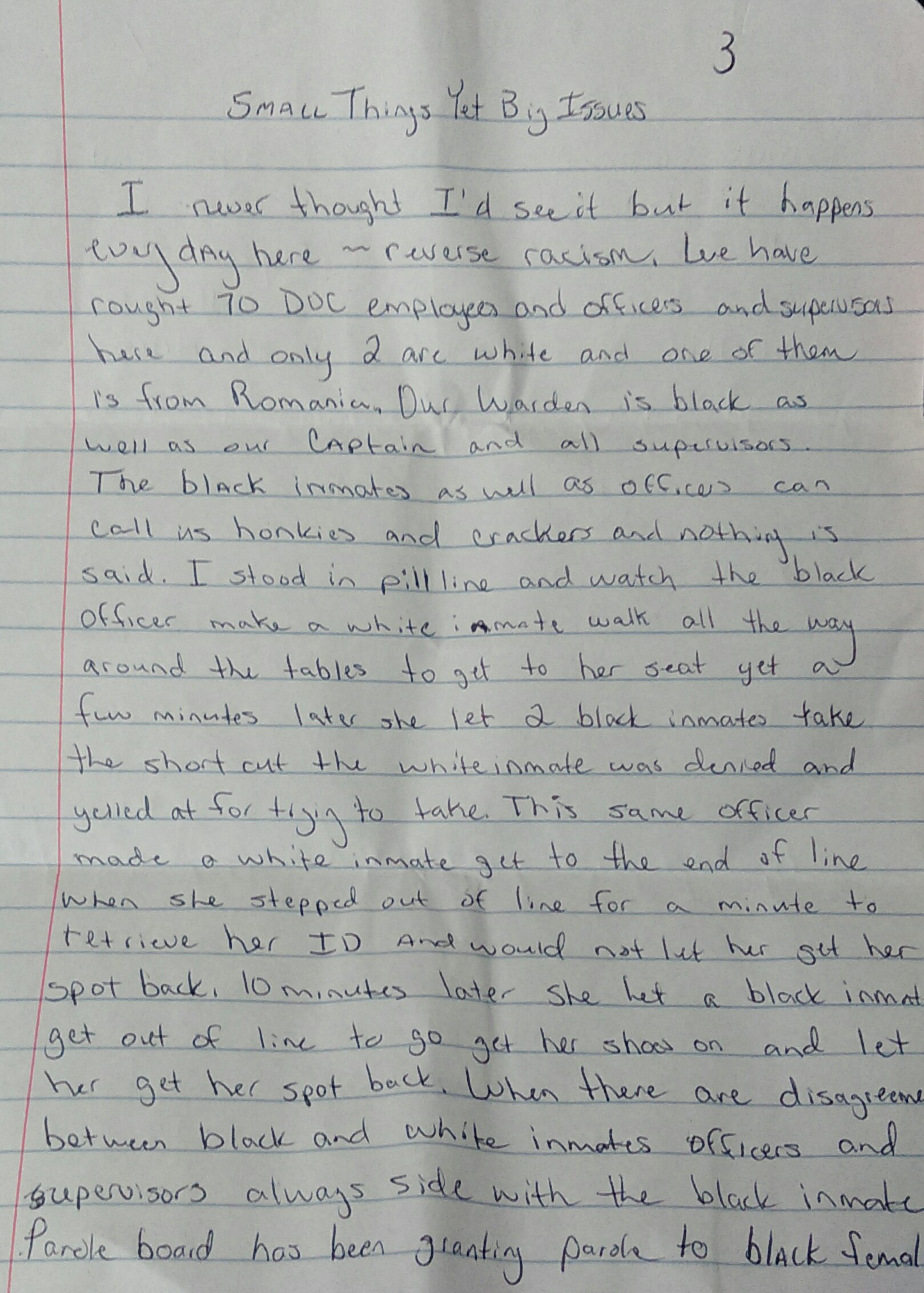
Montgomery Women’s Facility has been without a full time Warden since Mr Edward Ellington left to take over at Draper Correctional Facility in March 2016. Wardenship passed temporarily to Warden Terrance during which time conditions within the facility took a drastic turn for the worse, Ms Terrance left in August and the Captain has been acting as warden since.
Alabama Department of Corrections staffing woes and their impact, are still negatively felt throughout all aspects of ADOC, it has been reported that at other facilities, Correctional Officers have gone on strike citing the dangerous conditions that are festering as the upper echelons of Alabama Department of Corrections struggle to get a grip on a system that is failing from the top all the way down. Its not just an issue of safety and security, the absence of a classification officer as at Montgomery Women’s Facility increases stress, tension and creates an additional bottleneck in an already dangerously over crowded prison system, people that have served their sentences, especially those that are considered long-timers should be high on the list of priorities as they approach their parole and end of sentence dates.
Classification Officers are supposed to interview and assess amongst other things the custodial level biannually, effectively allowing those that have a low enough custody level, to be able to work and be in preparation for their release. Having no classification officer is a serious issue and it keeps women held on higher custodial levels than which they are entitled too, in an already over populated, neglectful and abusive prison system, common sense you would have thought, would be a priority, facilitating the lowering of custodial levels to those eligible, effectively freeing up bed space and hastening the transition back into society, not to mention raising moral, giving hope to those that have often served many years from dubious convictions.
Bear in mind too, that Alabama cases are difficult for many reasons, for example Post-conviction records are exceptionally hard to obtain in Alabama, and there is no specific post-conviction DNA testing statute except in capital cases. New evidence often must be brought before a court within six months of discovery, which can be extremely difficult and at times, impossible. Alacourt.com controls public court records in Alabama and charges exorbitant access fees, making the records virtually inaccessible to those incarcerated or their families which are generally on low incomes, Alabama needs to rethink its policy on locking people up and throwing away the keys, giving fair hearings, trials and sentences would be a great start.





 Montgomery Women's Facility
You must be logged in to post a comment.